
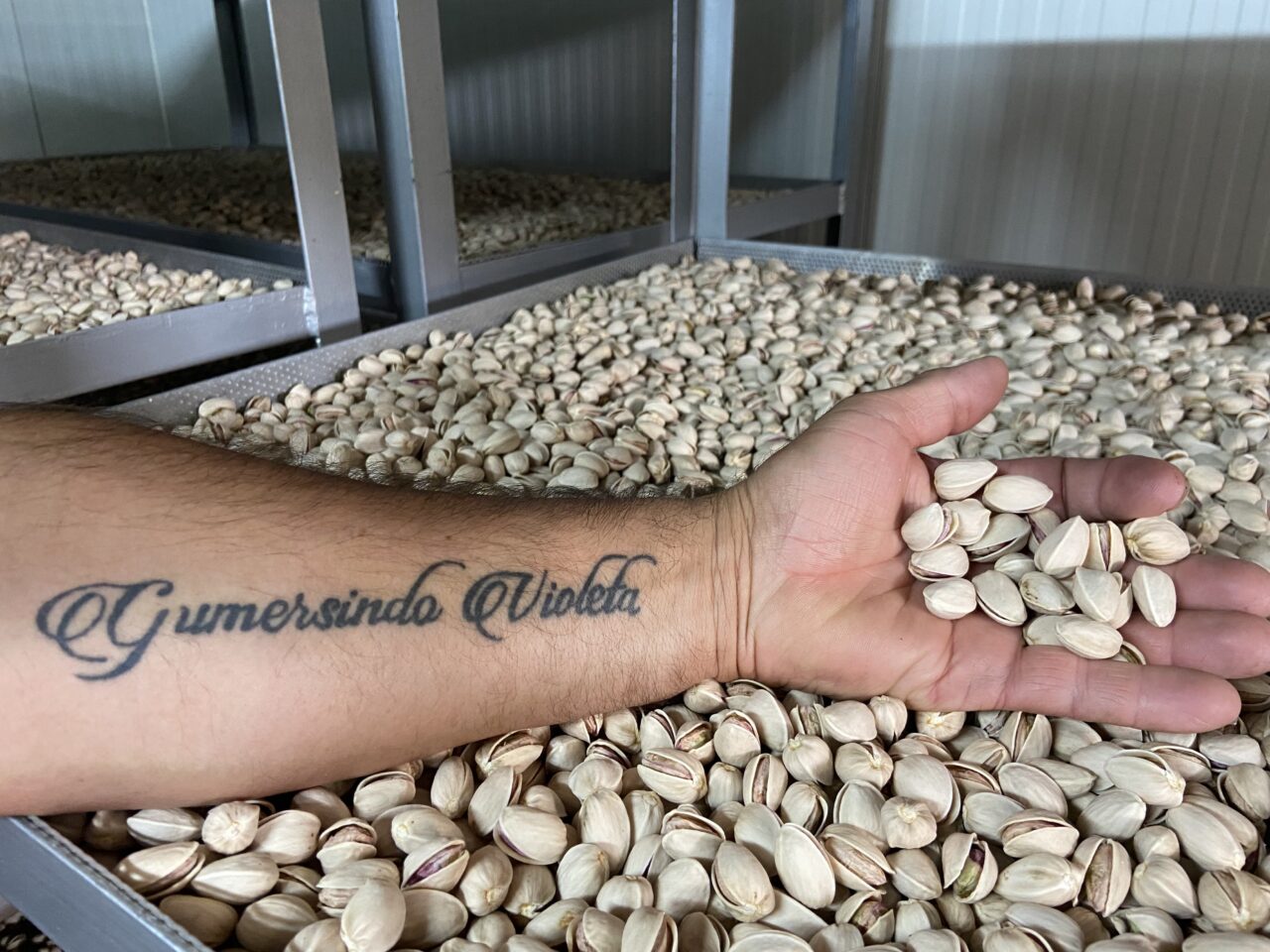
A Warm Welcome into the Family
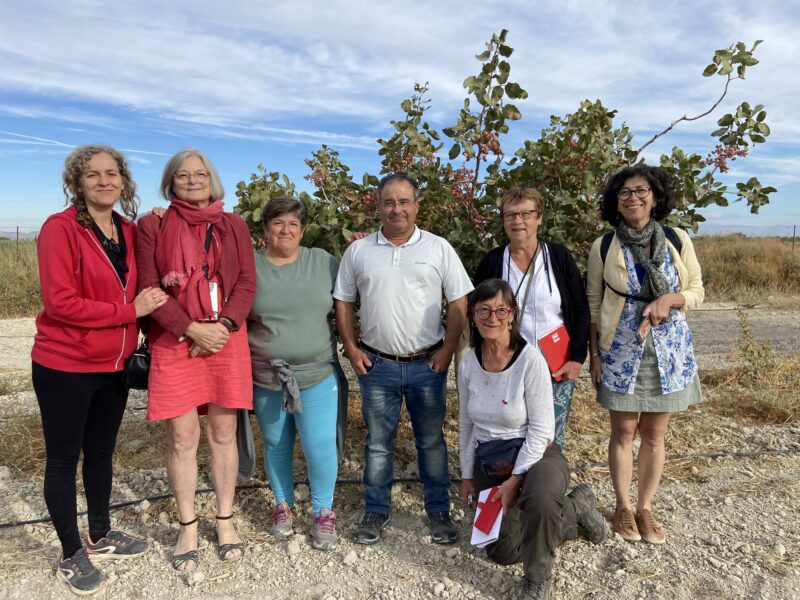
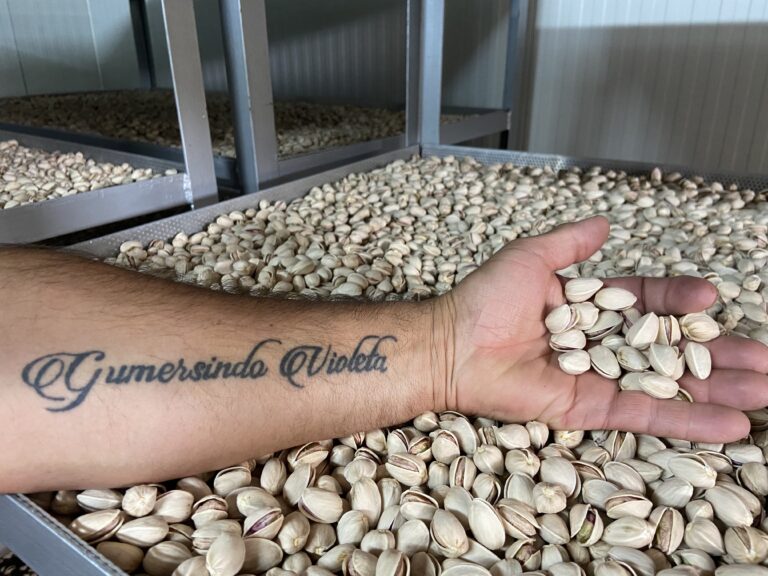
As we arrive at Pistasol’s finca “Los Albardinales” in the municipality of Caniles, I am swept up in a wave of warmth and genuine enthusiasm. Together with our guests from Givrés d’Oranges, representatives of a loyal consumer group from Lille, France, I get to spend a day with our pistachio and almond producers Violeta Molina and Gumersindo Sánchez, seeing their work up close.
“Family business” is not a marketing phrase here. It is simply everyday life. While Violeta and Gumersindo look after the plantations, their two children help with the harvest and processing. Violeta’s mother keeps an eye on the packing process. Every single pistachio passes through the hands of the whole family.
The Pistachio Tree: A Tough Survivor Against the Odds
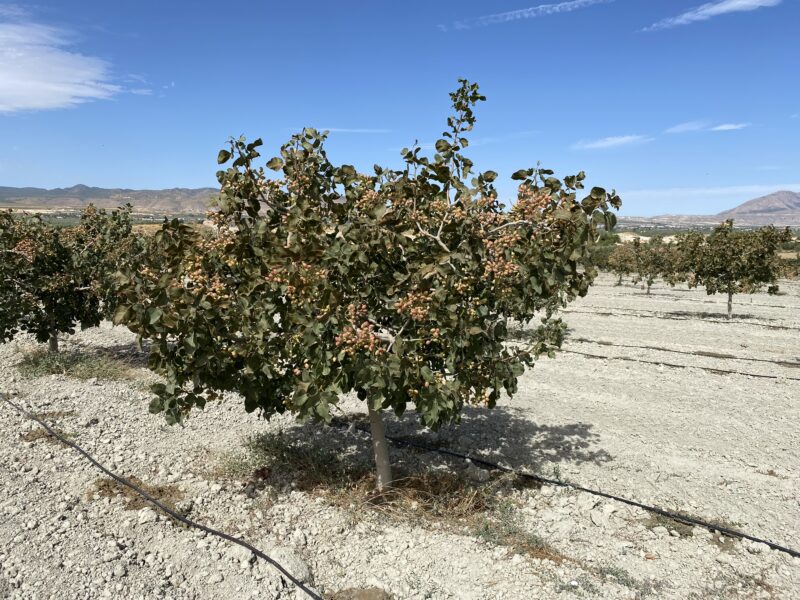
Gumersindo shows us his trees and explains what it takes for them to thrive under these conditions. Anyone who sees the stark, majestic beauty of this Andalusian high plateau immediately understands the climatic challenges.
The pistachio tree is an amazingly resilient survivor. It needs plenty of winter chill to bring its buds out of dormancy, followed by hot, dry summers for the fruit to ripen properly. Conditions that would be disastrous for many other fruit trees. It is also a tree that requires patience: the first substantial harvest can take five to seven years. But once established, pistachio trees can keep producing for decades.
The Kerman Pistachio
Pistachio trees are either male or female – and a variety is always one or the other. At Pistasol, the female trees are mainly the well-known Kerman variety, originally from Iran’s Kerman province and one of the classic varieties used in commercial pistachio production.
Kerman produces large, round nuts with a good natural shell opening – known as splitting – and a distinctive, nutty flavour.
But for a harvest, the female trees are only half the story. Without male trees, there are no pistachios. They provide the pollen – and it has to arrive at just the right time. For every 5–8 female trees, there is one male tree.
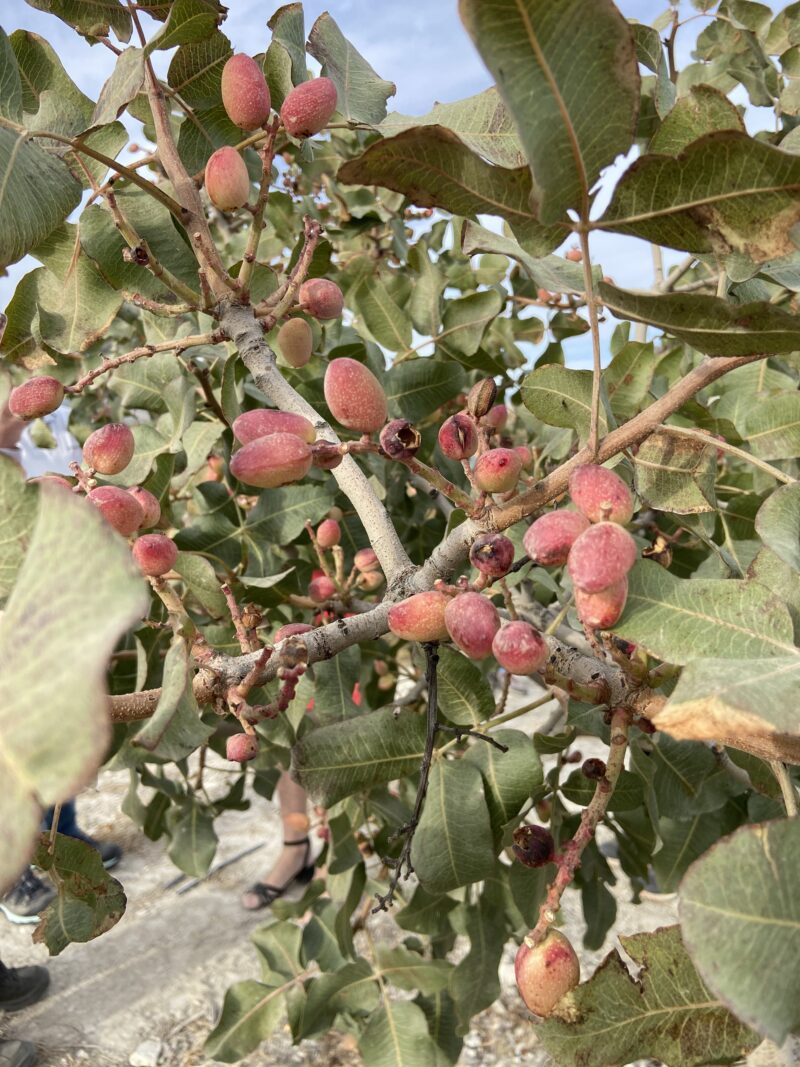
Pistasol has traditionally relied mainly on the male variety Peter. However, Peter needs fewer winter chill hours and can therefore flower too early in mild weather. If the female Kerman trees open their flowers several days later, there may not be enough viable pollen left. The result can be poor pollination, major crop losses and many “blank” or empty nuts.
For this reason, Gumersindo has also been planting the later-flowering male varieties Egino and Guerrero in recent years. This extends the window for reliable pollination. Under his conditions though, Peter remains an especially good pollination partner for Kerman.
As far as flavour is concerned, the three “fathers” make little difference. The unmistakable creamy, aromatic flavour, sweetness and characteristic taste of a Pistasol pistachio are shaped mainly by the genetics of the female Kerman tree, the soil and the dry Andalusian climate.
The pollen partner can, on the other hand, influence fruit size, kernel weight and, above all, the splitting rate – how readily the shell opens on its own.
The Secret of Salty Soil
Gumersindo laughs when he tells me how his neighbours initially thought he was crazy. Hardly anyone believed that pistachios could thrive on this high plateau at all. But when he discovered the naturally high salt content of the soil, he deliberately chose pistachios, one of the most salt-tolerant fruit trees around. And he was right.
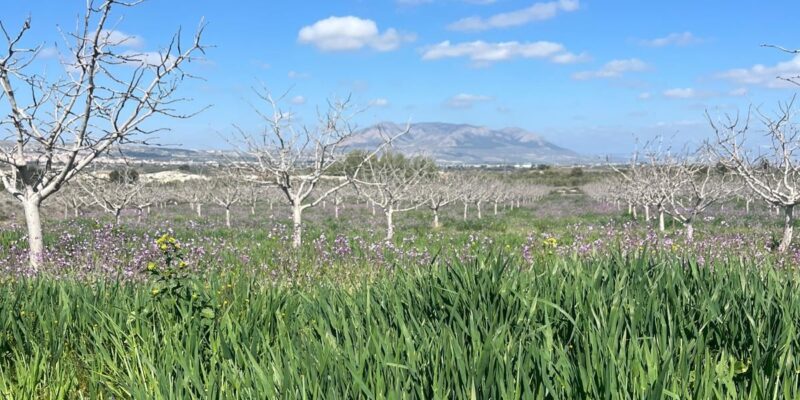
Today, many of his neighbours have followed his example – mainly because the traditional olive production is economically susceptible while pistachio sells better every year. But the results vary. The widespread reddish soils, known as terra rossa, often produce larger fruit. Their higher clay content allows them to hold more water. Gumersindo is nevertheless convinced that it is the moderate salt stress of the Altiplano’s pale, calcareous soils that gives his pistachios their distinctive, concentrated flavour. The trees respond to these conditions by accumulating soluble sugars and other protective compounds – and in his experience, that is what makes the difference: the nuts may be smaller, but they are more intense in flavour.
Ecological Pioneering for Biodiversity
When it comes to biodiversity at “Los Albardinales”, Violeta tells us about a special project on the farm. From the very beginning, one thing was clear: Pistasol would be fully certified organic, with no synthetic chemical crop protection.
As part of Tierra y Libertad’s biodiversity project, they have already installed nesting boxes, lookout posts for birds of prey and a water basin for insects, amphibians and wildlife , as well as planted hedges of aromatic wild herbs.
But the couple are taking things a step further. They propagate native and Mediterranean plants right here, under the harsh conditions of the Altiplano. From seeds collected from selected parent plants, they grow hardy, perfectly adapted strawberry trees, French cotoneasters, Arizona cypresses and white mulberry trees. In this way, they help preserve valuable species and strengthen biodiversity in the region – including for other Tierra y Libertad producers.
Artisan Pistachio Processing at Pistasol
At Pistasol, pistachios are processed with great care, in small and manageable batches. Gumersindo takes us through each step of the process, explaining what matters along the way.
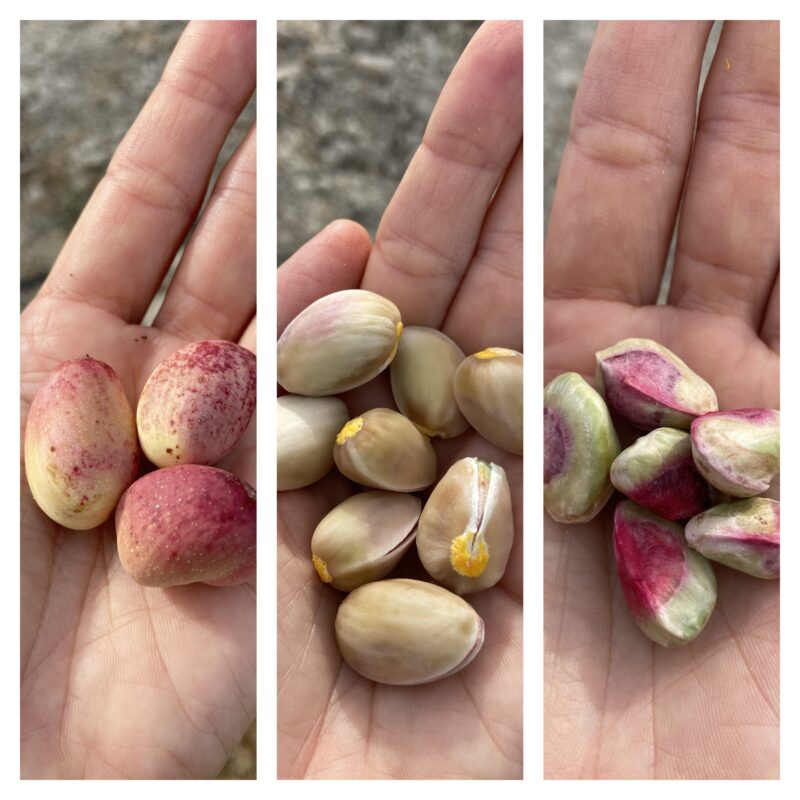
As soon as the pistachios are harvested, they are run through a special machine that removes their fresh green outer hull. This is essential, as the freshly picked fruit can quickly start to develop mould if the hull is left on. The pistachios are then washed and dried. Depending on the weather, this is done either outside – just as pistachios were traditionally dried in the sun in their country of origin, Iran – or inside the large processing hall with the help of powerful fans.
Gumersindo also shows us the device he uses to monitor the moisture content of each batch. Only once the pistachios have reached the right moisture level are they ready to go into the roasting machine. There, they are gently roasted at 80°C, helping to preserve their natural colour, delicate aroma and characteristic pistachio flavour.
Every step of the process is carefully monitored and handled at Pistasol – and, of course, regularly tasted along the way!
Crafting Pistachio Creme
Pistasol’s production doesn’t stop at whole nuts. Violeta and Gumersindo also turn part of their harvest into a creamy pistachio butter, made entirely from pistachios grown on their own farm.
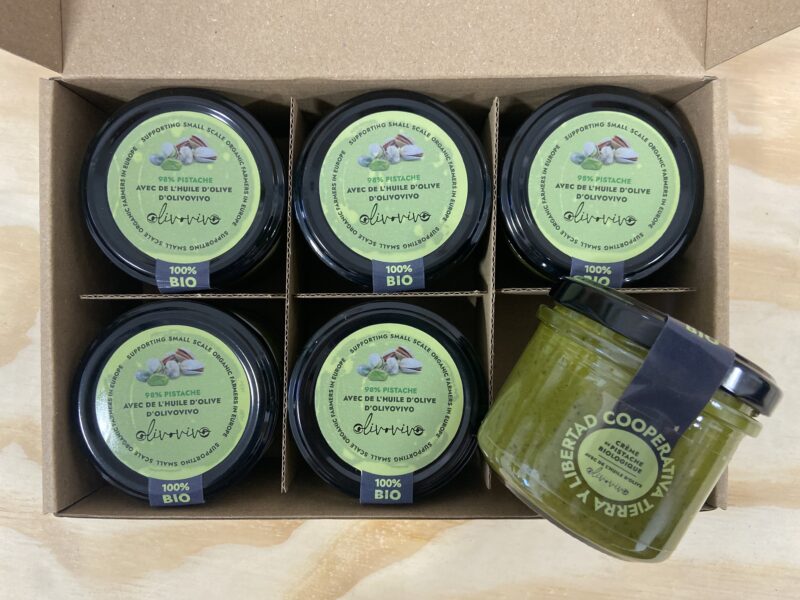
Once the pistachios have been stripped of their fresh greenish-red outer hull, they are gently roasted at 80°C. The soft, deep-green kernels are then removed from their protective shells and processed into creme.
For the extra-creamy texture that melts on your tongue, they add a splash of oil. Usually, this would be a neutral-tasting sunflower oil. Since 2025, however, Pistasol has been using the extra virgin olive oil “Olivovivo”, which brings out the natural flavour of the pistachio without overpowering it. Olive oil producers Begoña and Rafael are also members of Tierra y Libertad – and once again, the circle comes together.
Finally, Time to Crack Some Pistachios!
Of course, we get to taste them too.
Right there in the field, we pick fresh pistachios and try them on the spot. If you have never tasted a fresh pistachio before, the flavour of the still-raw fruit comes as a surprise.
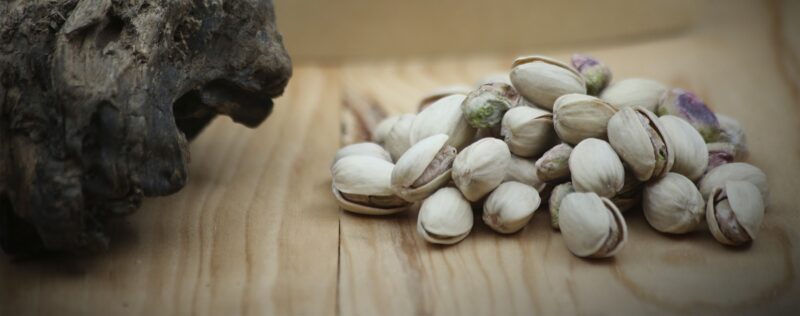
Later, in the processing hall, we taste the pistachios after air-drying and then again after gentle roasting. The difference from a packet of supermarket pistachios is striking: a natural sweetness, a deep flavour and an intense green colour that strongly reminds me of the original from Iran.
Because the flavour is so intense, Pistasol prefers to roast its pistachios without any added salt, at just 80°C. Imagine, industrial pistachios are sometimes roasted at temperatures of 100°C or even 150°C!
At dinner that evening, I get to experience Violeta and Gumersindo’s love of good food, their infectious sense of humour and their sheer enjoyment of life. We eat, talk and laugh. And, of course, there are pistachios on the table again.
Sign up to our Newsletter
We regularly post stories about the work of our members and the history of farming in Spain. If you would like to hear more of those stories, sign up to our email newsletter.
Before sending, please have a read of our privacy policy.
A Visit to Pistasol: The Green Gold of Salty Soil
A brief lesson on mangoes
New product: ANCHOVIES!
Spring in the Guadalhorce Valley
Interview with Montse (Biovalle) on International Women’s Day 2026