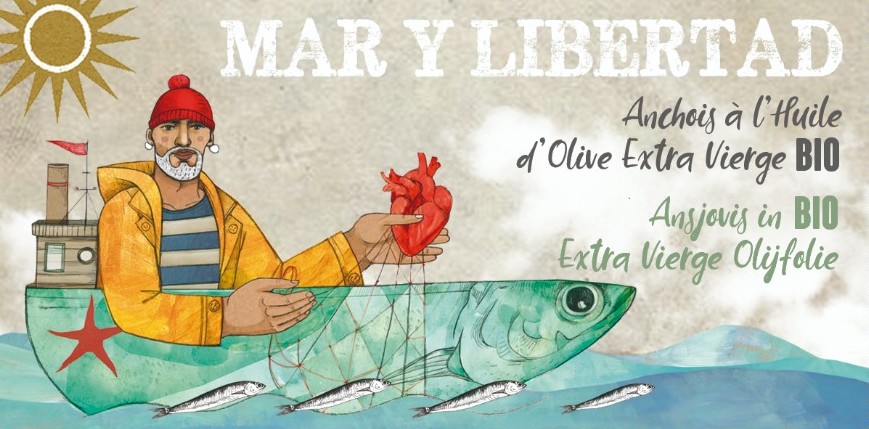
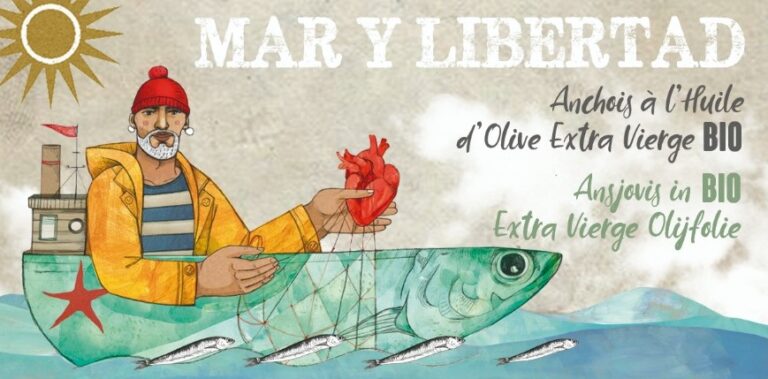
MAR Y LIBERTAD keeps growing!
Our sardines and mackerel from Isla Cristina, in the south of Huelva, are expanding the family: anchovies are now arriving from the waters of northern Spain to join the MAR Y LIBERTAD product range.
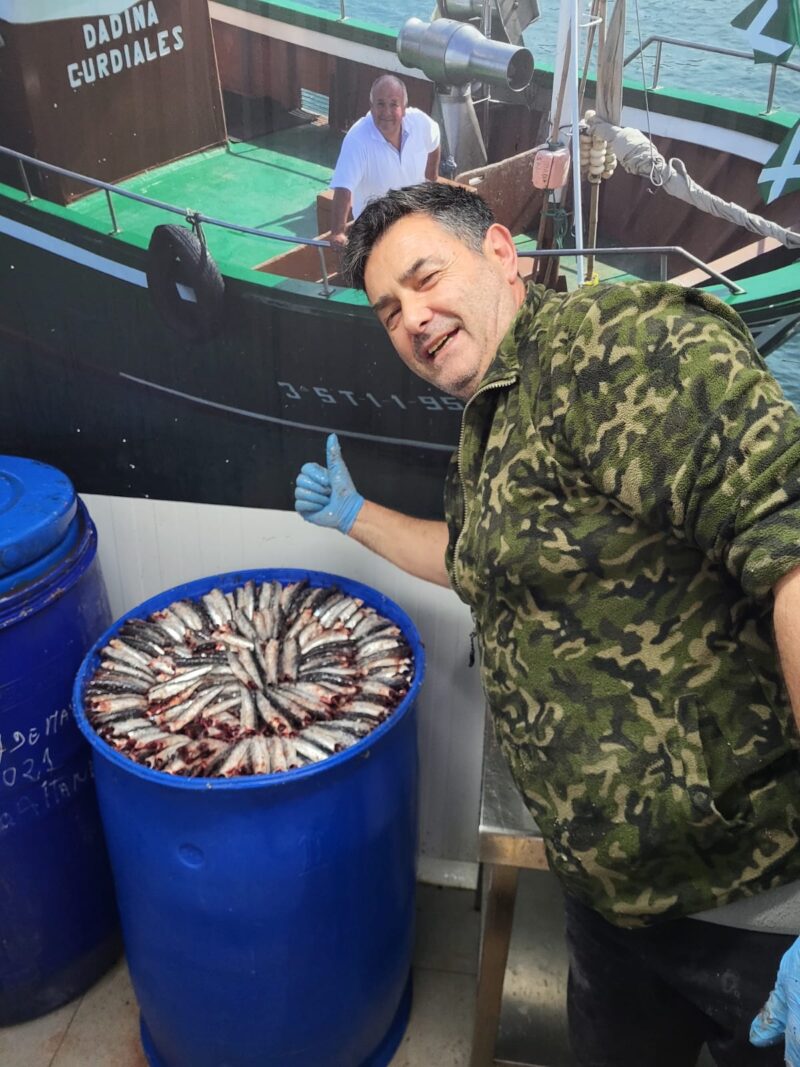
Every year, between March and June, once the European anchovy (Engraulis encrasicolus) has spawned off the Cantabrian coast, the fishing season begins. It is then that the fishermen from the small coastal villages of Cantabria set out to sea every day in their boats to bring in a catch that forms part of a long-standing tradition linked to the region and its communities.
The family of Daniel Guerrero Hoyos sources fresh anchovies directly from catches that have just been landed by various fishing families from the coastal villages of Cantabria. The anchovies are then prepared using traditional methods, through a meticulous process in which each fillet is prepared by hand.
Just as is the case with our fishermen in the south, small family-run businesses in Cantabria are currently facing enormous challenges. The growing concentration of the sector in the hands of large corporate groups is jeopardising the survival of more people-centred production models, which are deeply rooted in the local area and committed to sustainability. That is why the support of conscious consumers, who are able to recognise the value behind each product, is so important.
Why anchovies from Cantabria?
Anchovies from the Cantabrian Sea are regarded by gourmets as some of the best in the world. This is not only due to the way they are prepared, but also to the specific fishing method and the biological characteristics of the stocks.
The European anchovy (scientific name: Engraulis encrasicolus) is found in the eastern Atlantic. The southern part of the Bay of Biscay, along the coasts of Cantabria and the Basque Country, is particularly important for the famous Cantabrian anchovies.
A disaster leads to sustainability
Anchovy fishing in Cantabria is also an inspiring example of recovery and responsible management. Paradoxically, however, the current situation stems from a period of drastic restrictions: due to massive overfishing, anchovy fishing was completely banned in the area between 2005 and 2010. However, this drastic measure, together with subsequent regular scientific monitoring of the stocks, led to the sustainable recovery of the anchovy stocks.
Under strict conditions and with continuous scientific monitoring, local fishing was finally authorised once again.
- The traditional fleet consists mainly of medium-sized inshore fishing vessels:
- between 20 and 30 metres in length
- Daily or short-duration trips
- Return to port, usually on the same day
- Catch supplied directly to local processors and canneries
Purse seines are traditionally used. This method is particularly suitable for anchovies, as these fish live in dense shoals near the surface. It is considered selective and results in relatively few by-catches, as well as minimal damage to the seabed.
The procedure:
- A shoal of fish is located using sonar or visual observation.
- The net is positioned in a circle around the shoal.
- A trawl line closes the net at the bottom, forming a bag.
- The shoal is almost entirely enclosed; only the largest fish are caught. The smaller fish escape through the wide mesh.
The sustainability of the Cantabrian anchovy is therefore not a matter of chance, but the clear result of a coherent combination of scientific monitoring, strict regulation and traditional, environmentally friendly fishing practices. Clearly defined catch quotas and continuous monitoring of stocks ensure that only as many fish are caught as the stocks can sustain in the long term. Seasonal catch restrictions protect the delicate spawning periods, whilst selective fishing with purse seines minimises by-catch. Added to this are short transport distances, local processing and full product traceability, ensuring transparency throughout the entire value chain.
For this reason, the high-quality Cantabrian anchovies are not only regarded as a delicacy, but also as a compelling example of how traditional coastal fishing, responsible management of natural resources and economic success are perfectly compatible.
MAR Y LIBERTAD’s anchovies come from the coastal town of Laredo
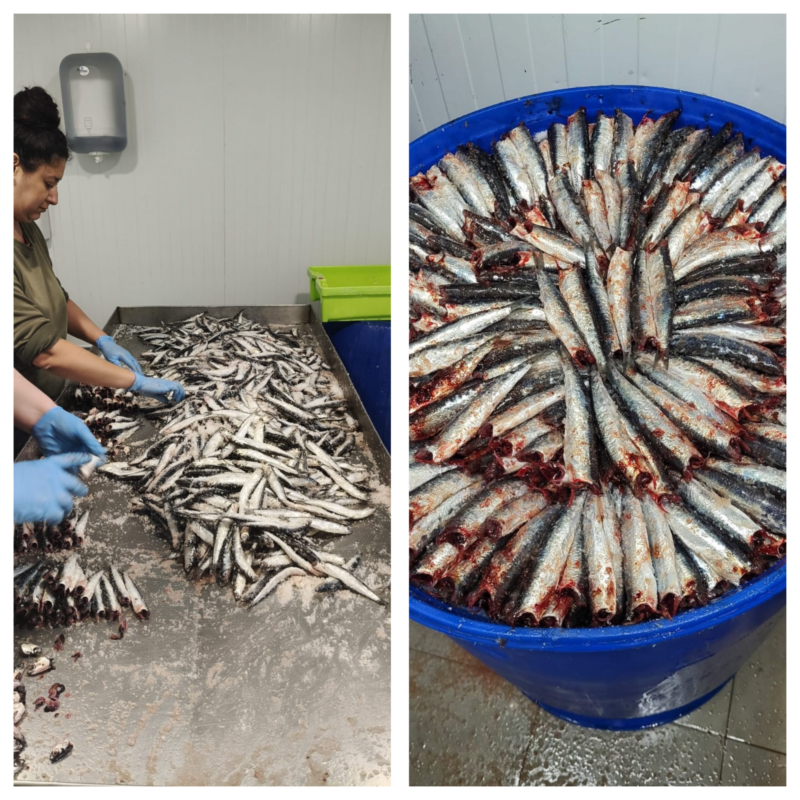
Daniel buys fresh anchovies daily from the port for their production.
After being caught, the fish are processed at the family’s small-scale artisanal facility:
- They are sorted
- The heads and guts are removed by hand
- They are placed in barrels of salt
- They are cured for several months
- They are filleted by hand
- They are preserved in olive oil.
The curing process can take between 6 and 12 months.
During this process, the characteristic umami flavours and the firm, meaty texture of high-quality anchovies develop. Much of the work is still carried out by hand, particularly the filleting and cleaning.
Anchovies vs. boquerones
There is often some confusion on this point. Biologically speaking, anchovies and boquerones are the same fish: the European anchovy (Engraulis encrasicolus)
The difference lies in the processing:
For boquerones, which we are mainly familiar with from tapas, fresh anchovy fillets are marinated in vinegar. They have a slightly tangy flavour and the fillets are white.
For anchovies, the fish are salted and left to mature for several months through fermentation. This gives them their dark colour and characteristic umami flavour.
MAR Y LIBERTAD’s anchovies, like all our tinned fish products, are preserved in high-quality, cold-pressed extra virgin olive oil from OLIVOVIVO.
Every anchovy was once a boquerone, but not all boquerones become anchovies.
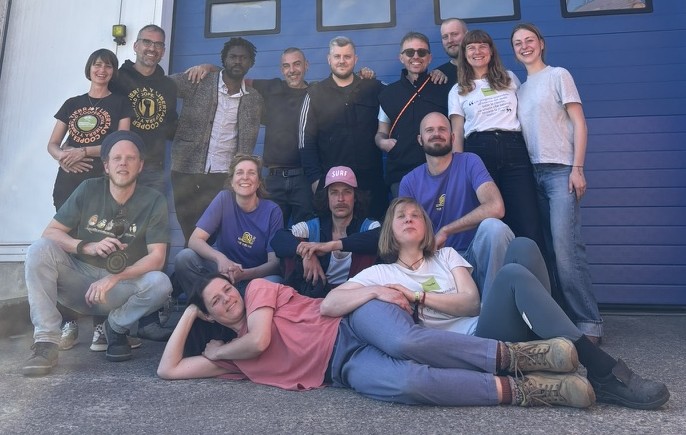
Projects that make us stronger together
The inclusion of these anchovies in our project stems, once again, from the relationships of trust we have built up over the years. Following the success of our sardines and mackerel, our Belgian partner, The Food Hub, began receiving enquiries from customers interested in sustainably sourced anchovies. At the same time, Martina, a colleague at our Tierra y Libertad office, recalled that a childhood friend of hers came from one of these fishing villages in Cantabria. Thanks to that personal connection, we were able to establish a partnership based on shared values.
Each of these connections fills us with joy and hope. It reminds us that there are still committed producers who work with passion, respect and responsibility to provide food of the highest quality. And it also shows us that there are consumers willing to support a different way of producing and consuming – one that is fairer, more sustainable and direct.
With every new partnership, our network continues to grow. And with it grows the potential to strengthen a food model that places quality, the dignity of work and care for our environment at its heart.
We have reserved the first trial batch of anchovies for our Belgian customers. However, if this new project grows and our relationship with the producer strengthens, we will be able to offer larger quantities of anchovies in the future. If you’re interested, let us know!
Sign up to our Newsletter
We regularly post stories about the work of our members and the history of farming in Spain. If you would like to hear more of those stories, sign up to our email newsletter.
Before sending, please have a read of our privacy policy.
The Green Gold of Salty Soil
A brief lesson on mangoes
New product: ANCHOVIES!
Spring in the Guadalhorce Valley
Interview with Montse (Biovalle) on International Women’s Day 2026